
Water Softener vs. Whole-Home Filtration: What West Valley Homes Need
You stand in the water-treatment aisle, or on the phone with two companies, and you get two confident answers that do not agree. One says a softener is what you need. The other says whole-home filtration. A third voice says buy both and be done with it.
The confusion is fair, because the two systems often sit side by side in the same garage and sometimes plumb together. But they do two genuinely different jobs, and once that is clear, the decision for your own home gets a lot simpler.
Two different jobs, often confused
A water softener handles hardness — the dissolved calcium and magnesium that make West Valley water "hard." A whole-home filter handles the things you can taste, smell, or screen out — chlorine, sediment, certain contaminants.
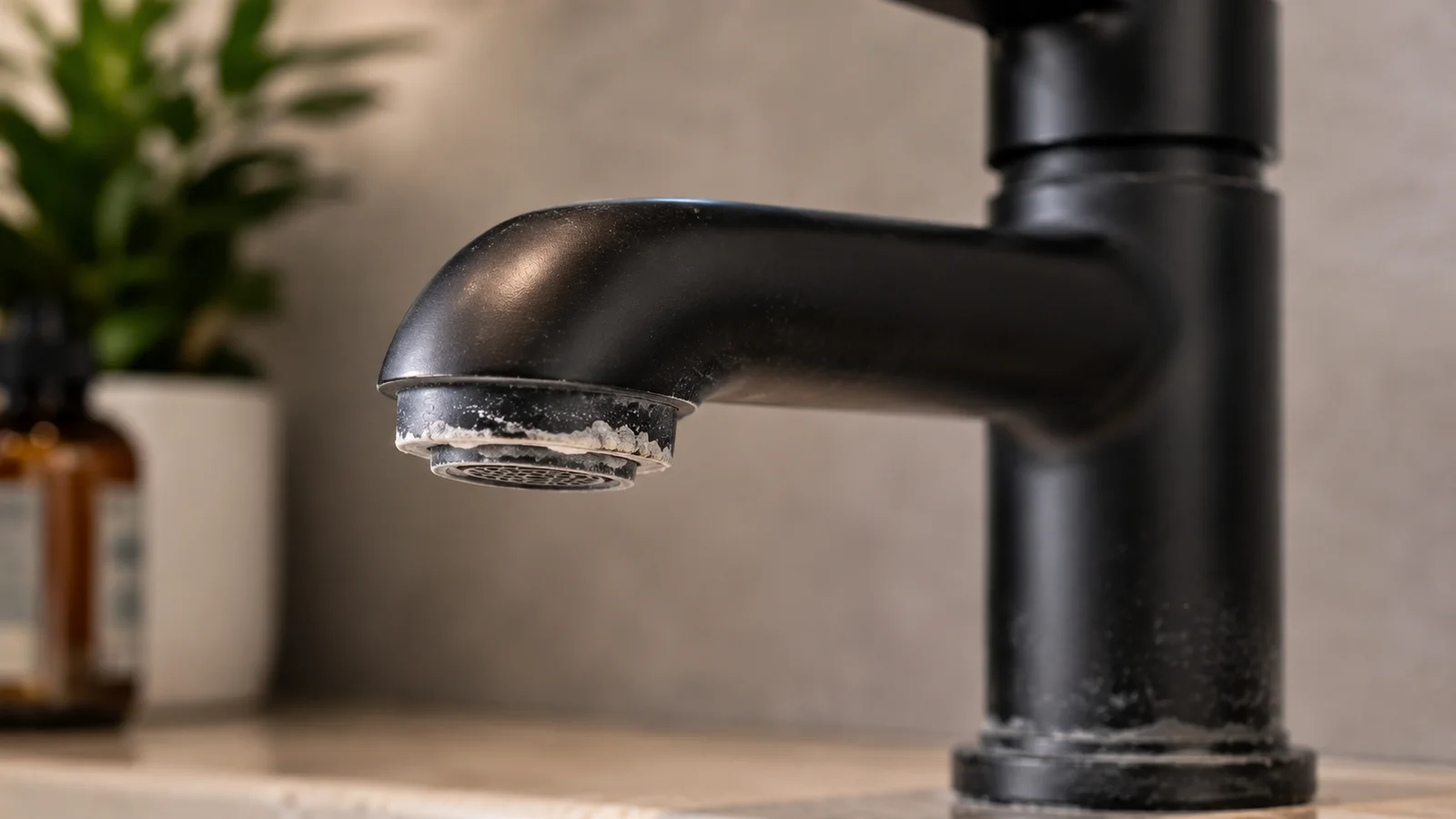
Those are separate problems, and that is the heart of it. Hard water is what dries cloudy spots onto your glassware, leaves white scale around faucets, and builds mineral deposits inside fixtures and the water heater. (Our post on Phoenix hard water explains why our water is so hard in the first place.) Filtration does nothing about any of that. And a softener does nothing about the smell of chlorine in the shower.
Buy one expecting it to do both jobs, and you will be disappointed in a predictable way.
What a water softener actually does
A true water softener removes hardness minerals through a process called ion exchange. In plain terms: the hard water passes through a tank of resin beads, the calcium and magnesium cling to the resin, and a small amount of sodium takes their place. Every so often the system rinses that resin clean with a salt solution — the regeneration cycle — and resets. That is why a softener has a salt tank you top up.
What you notice is the absence of scale. Glass shower doors stay clear longer, soap lathers instead of curdling, faucets stop growing chalky crusts, dishes come out of the dishwasher without spots, and the water heater and appliances stop collecting mineral sediment.
One point worth knowing: some systems sold locally are "salt-free conditioners." Those are not softeners. They do not remove hardness — they alter how the minerals behave so less scale sticks to surfaces. They can help in some homes, but they are scale-control, not softening, and it is worth knowing which one you are being quoted. Our water softener page covers the service side in more detail.
What whole-home filtration actually does
Whole-home filtration is aimed at a different list.
Most systems combine a sediment stage with activated carbon. The sediment stage catches physical particles — sand, grit, rust. The carbon stage is what takes out chlorine taste and odor, and depending on the media, some other contaminants. Municipal water is chlorinated on purpose, as a disinfectant — the EPA's drinking-water resources lay out the standards public systems follow — and carbon filtration is what makes the water at every tap smell and taste more neutral, most noticeable in the shower and in a glass of tap water.
What filtration does not do is soften. A home can have genuinely good-tasting, clean-smelling water and still grow heavy scale on every fixture, because the hardness minerals are still in it. When someone tells us they installed a whole-home filter and their shower glass still spots over, this is almost always why. Filtering and softening are two layers, not one.
Which West Valley homes need which — or both
Here is where it gets local.
Across most of the West Valley, the municipal water is both hard and chlorinated. That is the honest reason so many homes here end up with both systems: a softener for the scale, a filter for the chlorine and sediment. They are not redundant — they are solving different complaints.
The particulars still vary. An older Sun City home has decades of mineral exposure already inside its plumbing; a newer build in Verrado or Goodyear will still see scale, simply because of the water coming in. Homes farther out, beyond the municipal lines, may be on a private well — and well water is its own situation entirely, where the issue might be iron, sulfur odor, sediment, or hardness, and there is no answering it without a test.
For drinking water specifically, many households add a small reverse-osmosis unit under the kitchen sink. That is a point-of-use system — it treats the water at one tap for drinking and cooking, not the whole house. A softener for the house, a carbon filter for chlorine, and reverse osmosis at the kitchen sink is a common layered setup here. Not every home needs all three; plenty need only one.
How to decide for your home
The best first step is not a brochure. It is a water test.
Without one, it is easy to solve the wrong problem — the homeowner who hates mineral spots buys a filter, the one who hates the chlorine smell buys a softener, and neither gets what they wanted. A test tells you what is actually in your water, so you are deciding on facts. Your city's annual water-quality report is a reasonable starting point, and a plumber can confirm the hardness at your own tap.
Then ask yourself plainly what bothers you. White scale, spotty dishes, and soap that never feels right point to hardness, and a softener. A chlorine smell or off taste points to filtration. Both at once — which is common here — points to both. And check the practical side: a softener needs a place to sit and a drain for its regeneration cycle, which is worth knowing before you settle on a particular system.
If you would like help reading a water test or thinking through what your home actually needs, get in touch. We will give you a straight answer and a written estimate before any work starts — and we pick up the phone during business hours, with a missed call returned the same day.